
Find People in Washington County
Washington County people search work is best treated as a record trail, not a single lookup. A name may appear in the Circuit Clerk's land and court records, the County Clerk's voter and marriage files, the Assessor's property roll, the Sheriff's current detention tools, the Secretary of State's business search, or the Fayetteville Public Library genealogy collection. Each source was built for a public function. Together, they can confirm identity clues, old addresses, family links, and official roles.
Start with the clue that is least likely to change. A full name can lead to court cases, deeds, licenses, or business records. An old street address points first to the Assessor, GIS, and deed chain. A family-history search often begins with marriage, probate, obituary, cemetery, tax, and city-directory sources. If the web index stops short, Washington County Archives and the courthouse offices are the fallback.
- Search the county property and land-record path when a name or address may tie to a parcel.
- Run a participant search in Search ARCourts for public circuit or district court records.
- Use ACT DataScout and the Washington County parcel viewer for owner, mailing, and map clues.
- For family lines, combine marriage, probate, vital, obituary, tax, and directory sources before relying on one spelling.
- For records not online, ask the right custodian under the Arkansas Freedom of Information Act.
Washington County Search Offices
The main Washington County people search offices sit around the Fayetteville courthouse record system. The Circuit Clerk records land instruments, liens, plats, court filings, DD-214 filings, judgments, UCC fixture filings, powers of attorney, and related indexed records. The County Clerk handles voter registration, marriage licensing, DBA certificates, ministers' credentials, county court duties, and probate clerk functions. The Assessor maintains the property roll that links names to parcels, situs addresses, and mailing addresses.
These offices do not all answer the same question. The Circuit Clerk is strongest for deeds, liens, court files, and recording history. The County Clerk is strongest for voter and marriage channels. The Assessor is strongest for owner and address matching. The complete access-law and copy procedure belongs on the Washington County public records page, while the home workflow stays focused on finding the right starting point.
Washington County Circuit Clerk
280 N. College Ave., Suite 302
Fayetteville, AR 72701
479-444-1538
Washington County Clerk
280 N. College Ave., Suite 300
Fayetteville, AR 72701
479-444-1711
Washington County Assessor
280 N. College Ave., Suite 250
Fayetteville, AR 72701
479-444-1500
Washington County Records Since 1992
The most useful local split is the land-record cutoff. Washington County Archives says land records begin in 1834, and deed and mortgage records can be accessed online through 1991. Records created since 1992 must go through the Circuit Clerk. That means a Washington County people search for an old owner, heir, or seller may need both the Archives path and the modern recorder path.
The Washington County Archives Chronicle portal is the older-record gateway shown below. It matters because older deeds, mortgage books, grants, plats, and original index books can place a person in the county long before modern search systems. Current deed and lien work belongs with the Circuit Clerk, ACT DataScout, or county eSearch, while pre-1992 chain-of-title work belongs with Archives.

The screenshot shows why the archives layer should not be skipped. Older Washington County names may appear in direct and reverse index books even when a current web search has no match.
Local split. Use Archives for land records through 1991 and the Circuit Clerk for records created since 1992.
Washington County Property Search
Property records are often the fastest official path from a name to an address. The Assessor determines fair market value and maintains parcel records, while ACT DataScout and county GIS tools connect owner names, mailing addresses, situs addresses, parcel numbers, legal descriptions, values, and deed clues. A situs address is the physical property location. A mailing address is where tax notices go, and it can point to an owner who lives elsewhere.
The county-sponsored ACT DataScout portal and the Washington County parcel information viewer are separate but complementary. DataScout is the name and property-record entry point. GIS helps confirm the parcel on a map, compare boundaries, and sort city or unincorporated locations. Springdale can cross county lines, so map confirmation can be more than a visual aid.
| Search clue | Best first source | People clue returned | Follow-up |
|---|---|---|---|
| Owner name | ACT DataScout | Owner, mailing address, parcel | Recorded deed or tax receipt |
| Street address | GIS parcel viewer | Parcel, owner, location context | Assessor card and deed chain |
| Old legal description | Archives land records | Grantor, grantee, plat reference | Original index books |
| Taxpayer name | Collector or Archives tax rolls | Tax responsibility, household clue | Property or probate record |
The county GIS viewer screenshot from the manifest is tied to the official parcel map source. Use it after a property index match to see whether the address is in Fayetteville, Springdale, another city, or an unincorporated part of Washington County.
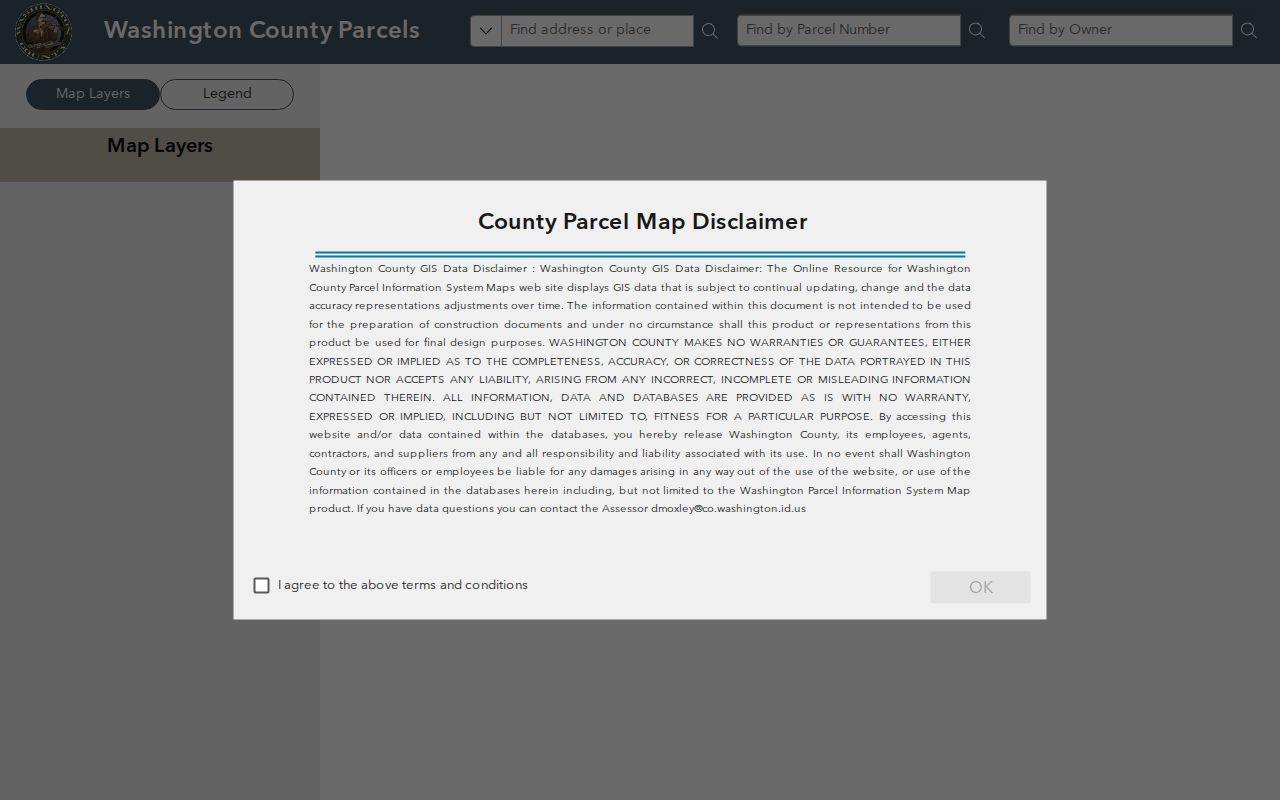
Map context helps keep a Washington County people search from drifting into the wrong city office or neighboring county custodian.
Washington County Court Search
Washington County circuit and district court research routes through Search ARCourts where public case information is available for courts using the Contexte system. The local Circuit Clerk files and processes civil, domestic relations, criminal, juvenile, and appeal records. Public case results can identify parties, case numbers, case types, filing dates, and docket events, but the full court file or certified copy may still require the clerk.
Search ARCourts should be read as an index, not the whole courthouse file. Juvenile, sealed, expunged, adoption, and confidential family material should not be treated as open people search data. Older court and probate groups may be better researched through Archives, which lists circuit record books from 1829 to 1991, chancery and divorce books from 1839 to 1991, probate books from 1837 to 1991, will books from 1829 to 1991, and naturalization records from 1829 to 1934.
| Court channel | What it covers | Name search | Offline fallback |
|---|---|---|---|
| Washington County Circuit Court | Civil, criminal, probate, domestic, appeals | Search ARCourts participant search | Circuit Clerk counter |
| District courts | Lower-level local cases when indexed | Search ARCourts or court staff | Specific district court clerk |
| Archives court records | Historical civil, criminal, chancery, probate, wills | Archives and Chronicle sources | Archives books and microfilm |
| Federal court | Federal civil, criminal, bankruptcy | PACER | Federal clerk or NARA |
The official Arkansas Judiciary Search ARCourts explanation describes the statewide public case information system. The captured page below is useful as a visual checkpoint for the court-search route.
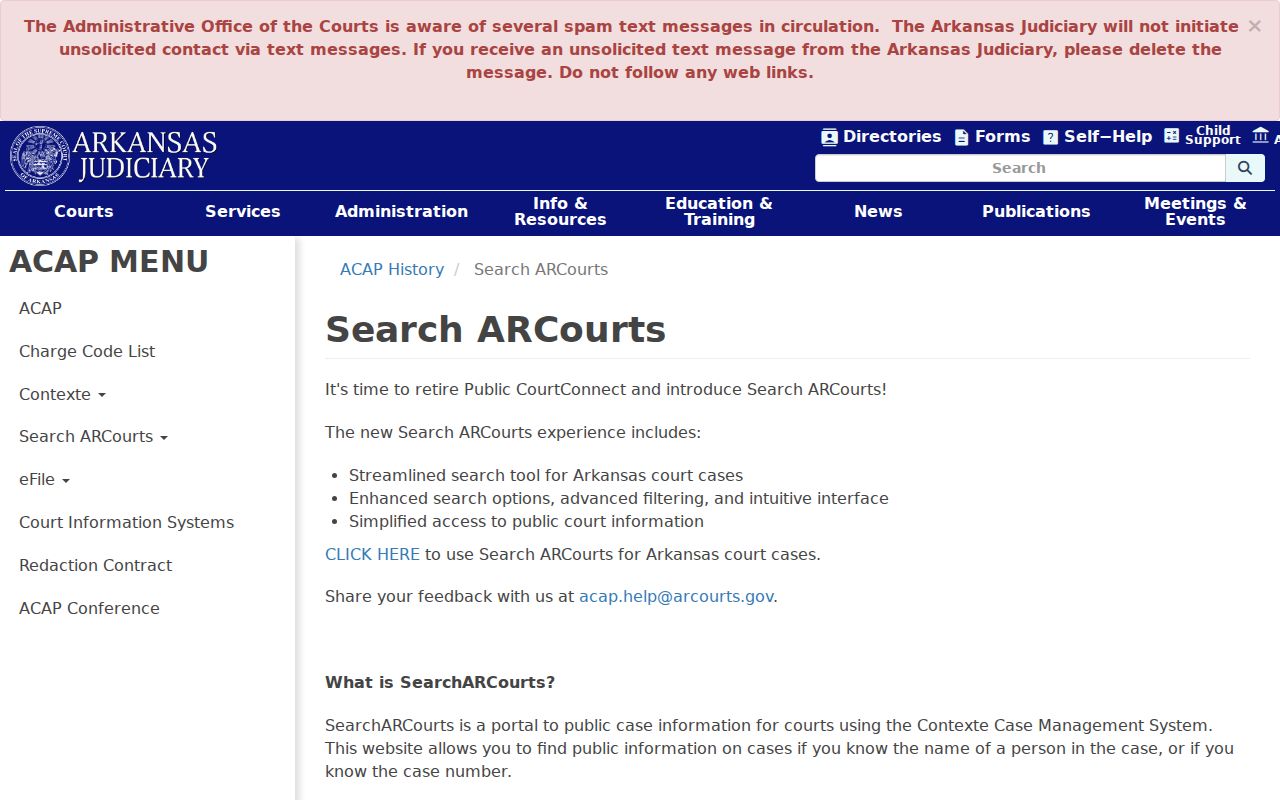
When the portal proves that a case exists, the Circuit Clerk remains the custodian for file access, copies, and records not exposed online.
Washington County Vital Records
Vital records in Washington County split between county records, court files, and Arkansas Department of Health certificates. The County Clerk issues current marriage licenses and the county marriage lookup searches party name and date range. ADH issues Arkansas birth, death, marriage, and divorce certificates through online, mail, walk-in, phone, and county health unit service channels. Divorce certificates and divorce court files are not the same record.
Ark. Code Ann. 20-18-305 creates the key public-access line: birth records become public after 100 years, while death, marriage, divorce, and annulment records become public after 50 years. Modern certificates require eligibility, identification, and proof of relationship. Historical searches may be better served by Archives, Fayetteville Public Library, newspapers, cemetery lists, probate files, and obituary collections than by a modern certificate order.
- Certificate
- An official ADH proof of a birth, death, marriage, or divorce event.
- Court file
- The pleadings, orders, and docket record held by the clerk for a court case.
- Index
- A search aid that proves a record may exist but may not show the full record image.
- Certified copy
- A copy authenticated by the custodian for official use.
Washington County Voter Lookup
Washington County voter registration is maintained locally by the County Clerk, while the statewide self-lookup is Arkansas VoterView. VoterView asks for first name, last name, and date of birth for the registrant search, and it can confirm address, party association, ballot statuses, and polling places. The voter file is a separate regulated record under Ark. Code Ann. 7-5-109, and secure-voter addresses are protected.
For a full end-to-end explanation of registration lookup fields, public voter lists, secure-voter limits, list maintenance, and recent Arkansas data-sharing news, use the Washington County voter registration records page. On the home workflow, voter records are a limited identity and civic-status source, not a broad directory to browse for private addresses.
Washington County Business Names
Business and license records can connect a person to an entity, trade, registered agent role, assumed name, or professional credential. The Arkansas Secretary of State business entity search exposes search fields for name, fictitious name, registered agent, and registered-agent city. Washington County Clerk also handles DBAs and fictitious business names, while Arkansas.gov and state boards host license verification tools.
| Lookup | Search fields | People clue | Keeper |
|---|---|---|---|
| Business Entity Search | Name, fictitious name, registered agent, RA city | Agent or business role | Arkansas Secretary of State |
| County DBA records | Assumed business name channel | Local trade name | Washington County Clerk |
| Medical Board Verify | License number or last name | Practitioner status | Arkansas State Medical Board |
| Nurse Portal | License number, NCSBN ID, partial name | Nursing license status | Arkansas Nurse Portal |
Washington County Custody Records
The Sheriff's Office publishes current detention information, including a detailed detainee roster and intake report. The roster fields captured in the research include name, age, race, sex, prior bookings, intake timestamp, bond details when present, and a last-updated notice. Statewide custody research can also use the Arkansas Division of Correction inmate search, Arkansas sex offender registry, and VINELink custody notification service.
These records are time-sensitive and should be verified with the actual custodian. A roster entry does not replace a court docket, and a court docket does not replace a jail status check. For warrants, Washington County directs people to call the Sheriff's Office with information, rather than treating the page as a full public warrant search.
Lawful use. Washington County public records are for lawful personal research, civic transparency, genealogy, property history, and safety checks. Do not use record clues to stalk, threaten, harass, or harm anyone.
Washington County Historical Search
Washington County's historical people search layer is unusually strong. Fayetteville Public Library's Grace Keith Genealogical Collection includes more than 14,000 print resources, microfilm, microfiche, maps, a digital image archive, newspapers, newsletters, census material, immigration records, Dawes Rolls, yearbooks, and Washington County sources. Washington County Historical Society identifies the collection as one of the region's major genealogy facilities.
City directories matter because they bridge census gaps. WCHS describes Fayetteville city directories with alphabetical residents age 18 and over, business firms, street numbers, mail addresses, and number of children. Tax books matter too. Archives says personal property tax records attempt to list all heads of households even when a person owned no land. That is a valuable clue for pre-phone-book residents.
| Historical source | Coverage clue | People-search value |
|---|---|---|
| FPL genealogy collection | Birth/death 1914+, marriage 1845+, court 1835+, land 1834+ | Family history and local name evidence |
| City directories | Examples from 1927-1936 and several later microfilm years | Adult resident, business, and address clues |
| Tax records | Combined books 1836-1867; personal property 1868-2001 | Heads of household, including non-landowners |
| Archives probate | Probate books 1837-1991; will books 1829-1991 | Heirs, decedents, estates, family links |
Washington County Source Check
Official records and commercial people-finder results answer different questions. County and state records show what an office actually keeps. Commercial people-finder services aggregate old public data, marketing files, web material, and phone or address sources that may be stale. The safer method is to use commercial hints only as leads and verify any real claim against the custodian record.
| Source type | Strength | Weak point | Best use |
|---|---|---|---|
| County record portal | Custodian-backed index | May omit old books or sealed records | Verify deeds, cases, parcels |
| State lookup | Centralized Arkansas record path | Eligibility rules may limit details | Voter, vital, business, license checks |
| Library or archives | Historical depth | May require in-person or staff help | Genealogy, old address, heir research |
| Commercial people finder | Broad hints | Stale, incomplete, unclear sourcing | Lead only, then verify officially |
Washington County Request Fallback
When a Washington County people search reaches a record that is not exposed online, the Arkansas Freedom of Information Act is the general fallback for records held by county or municipal agencies unless an exemption applies. The Attorney General says entities generally have up to three business days to provide records that are in active use or storage, and fees are generally limited to actual reproduction and mailing or transmission costs.
The official Arkansas Attorney General FOIA page is the current statewide reference point, including the 2025 FOIA Handbook. Use it with the specific custodian: Circuit Clerk for recording and court files, County Clerk for voter and marriage functions, Assessor for parcel records, Sheriff for detention or law-enforcement channels, and Archives for older books.
The FOIA source matters most when a portal confirms a record class exists but does not show the item needed for lawful personal research.
Washington County Search Context
Washington County is anchored by Fayetteville, the University of Arkansas, Springdale's Washington County side, and rural Ozark communities. That mix changes the record trail. University directories and Special Collections matter more here than in many counties. Springdale's city records can point to a person, while GIS decides whether the parcel or local record is actually in Washington County or Benton County.
The Census QuickFacts Washington County page supplies current population and demographic context, and the Encyclopedia of Arkansas Washington County entry gives stable local history. Both are context sources, not person-level indexes, but they help explain why Fayetteville, Springdale, Tontitown, Prairie Grove, Lincoln, Elkins, West Fork, Greenland, Farmington, and rural communities can appear differently in older records.
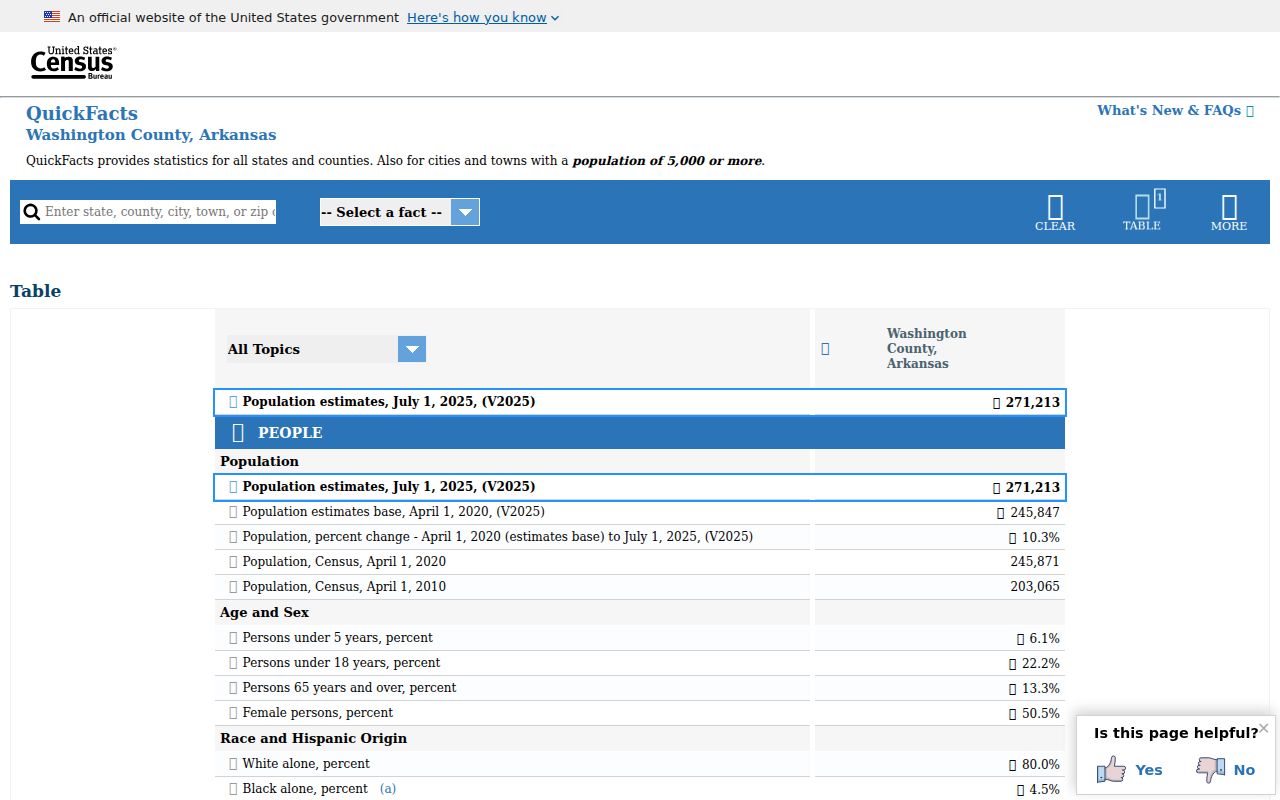
Population context helps interpret why a name may appear in school, university, city, county, property, or historical collections instead of one central directory.
The state encyclopedia entry is also useful for historical place names, settlement patterns, and county development. Those details can steer an older Washington County people search toward the right archive set.
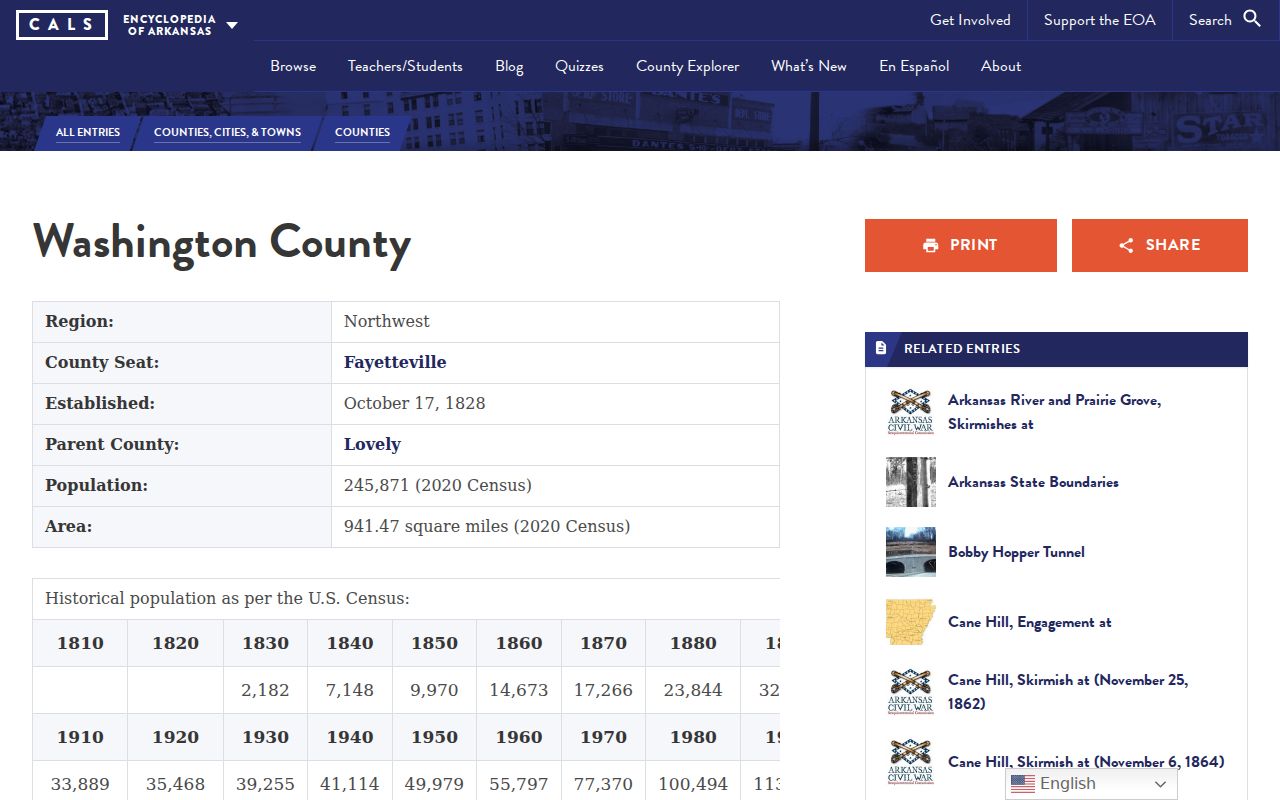
Historical context is a practical search tool when a surname, community name, church, cemetery, or school district no longer maps cleanly to a modern city address.